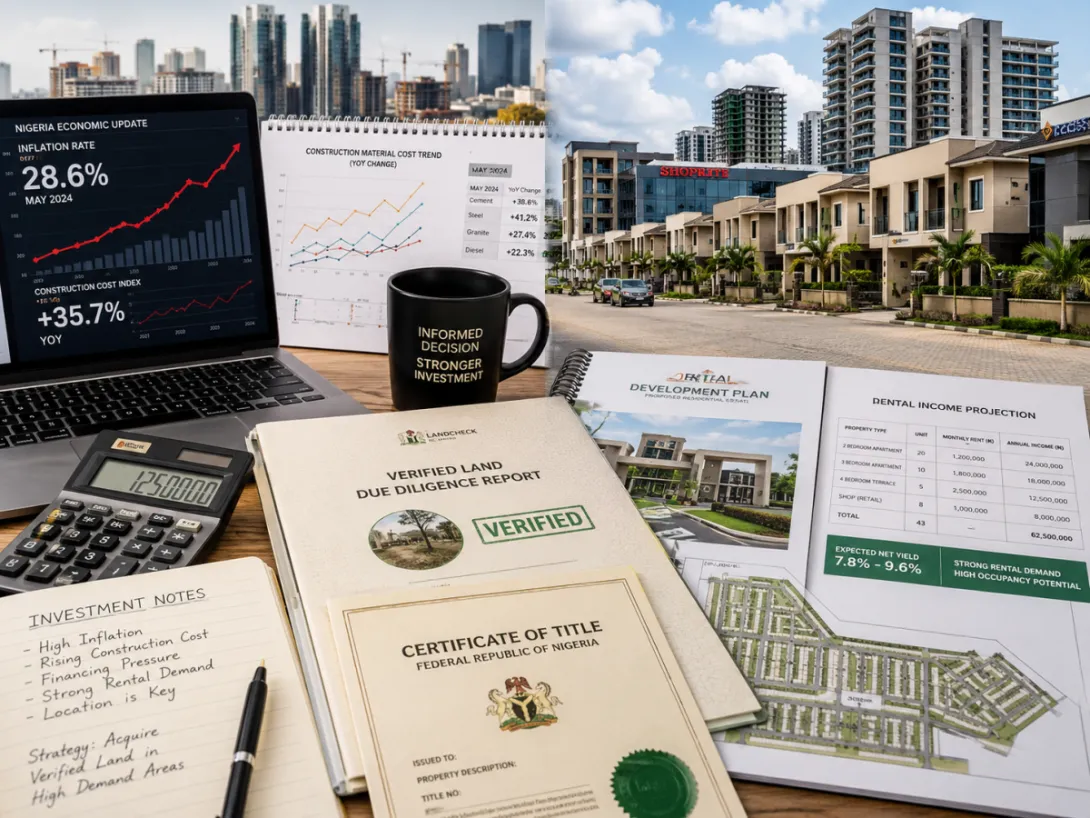
Property investment in Nigeria is still attracting interest in 2026, but the rules of the market have changed. Investors are no longer looking at real estate through price and location alone. They are now paying closer attention to inflation, construction costs, financing pressure, rental demand, land verification, and how economic changes affect long term value.
That is why understanding what current economic trends mean for property investment in Nigeria is important. A good property decision today requires more than optimism. It requires a clear reading of the wider economy and how that economy shapes demand, pricing, risk, and opportunity.
Inflation is still shaping real estate decisions
One of the biggest influences on property investment in Nigeria is inflation. When inflation remains high, the cost of land, building materials, labour, maintenance, and property services also rises. This affects both developers and buyers. New projects become more expensive to deliver, while existing properties become more expensive to maintain and replace.
For investors, this has two major effects. First, property prices tend to rise because replacement cost keeps increasing. Second, investors become more interested in real estate as a store of value because physical assets often feel more stable than holding cash in a high inflation environment.
Construction costs are pushing investment decisions in a new direction
Another major economic trend affecting the market is the steady rise in construction costs. Cement, steel, labour, transport, diesel, fittings, and finishing materials all play a major role in the cost of development. As these costs rise, developers become more cautious, and buyers see higher asking prices in the market.
This is changing how investors think. In the past, some investors focused mainly on buying and waiting. Now, many are becoming more deliberate about where they buy, what type of asset they buy, and whether the property can generate income rather than simply sit as a speculative hold.
This is one reason income producing properties, well located apartments, and rental focused assets are becoming more attractive in the Nigerian real estate market.
Financing pressure is making investors more selective
Property investment is also being affected by tighter financing conditions. When the cost of funds is high, borrowing becomes harder and more expensive. This affects both developers and end users. Developers must structure projects more carefully, while buyers often struggle with affordability and mortgage access.
The result is a more selective market. Investors are now asking stronger questions. Can this property generate cash flow. Is the location resilient. Can the project survive rising costs. Is the target market strong enough to absorb the final price.
This shift is pushing the market away from emotion driven buying and toward more practical, data conscious investment decisions.
Housing demand is still strong, but affordability is under pressure
Nigeria still has strong underlying housing demand. Population growth, urban migration, and the housing deficit continue to support long term interest in real estate. This means the opportunity in the market remains real.
However, affordability is a major challenge. Many people need housing, but not everyone can afford the kinds of properties being delivered in high cost environments. This creates a gap between demand and effective demand.
For investors, that means understanding the target market matters more than ever. The best investment is not always the most expensive one. It is often the one that matches what people can realistically pay for, whether through rent, installment plans, or outright purchase.
The rental market is becoming more important
As affordability pressure rises, more people remain in the rental market longer. This makes rental demand one of the most important parts of real estate investment in Nigeria today. In many urban locations, rising rents are becoming one of the clearest signs of pressure in the housing market.
For investors, this creates a major opportunity. Properties in strong rental areas can provide income, hedge against inflation, and remain active even when outright buying slows down. This is especially relevant in well connected urban neighborhoods, prime residential districts, and growth corridors with strong tenant demand.
That is why many investors are now looking beyond land appreciation alone and paying more attention to rental yield, occupancy strength, and tenant quality.
Prime and verified locations are becoming more valuable
In today’s market, not every property benefits equally from economic pressure. Stronger locations tend to remain more resilient. Areas with better infrastructure, established demand, premium appeal, and stronger rental markets usually hold value better than weaker or poorly documented areas.
At the same time, compliance and verification now matter more than before. Investors are becoming more careful about land titles, approvals, seller authority, and development status. A property with clear documentation and stronger legal certainty now carries more confidence than one surrounded by uncertainty.
This means the market is rewarding not just location, but quality of documentation and investment safety.
What this means for investors in practical terms
Current economic trends are not removing opportunity from the Nigerian real estate market. They are simply changing the type of opportunity that performs best.
For investors, this means:
Choose locations with proven or growing demand
Focus on properties with income potential
Take land verification and title checks seriously
Assess replacement cost before buying
Be cautious with weakly structured developments
Think long term, but buy with present realities in mind
In today’s environment, smart investment is less about chasing hype and more about choosing assets that can survive inflation, hold relevance, and meet real market demand.
Final Thoughts
What current economic trends mean for property investment in Nigeria is simple: the market is still active, but it is becoming more disciplined. Inflation, rising construction costs, tighter financing, rental pressure, and affordability challenges are all changing how investors should think.
Real estate still offers strong long term potential in Nigeria, but the best results are likely to come from investors who understand the economy behind the market, not just the market itself. The most successful property decisions in 2026 will come from strategy, verification, and realistic demand analysis.
Looking to make smarter property investment decisions in today’s market?
LandMall helps buyers and investors access better property opportunities, and supports clients with practical guidance across verification, planning, development, and project execution.
Call or WhatsApp +234 901 900 1191 or +234 808 668 2070 to get started today.