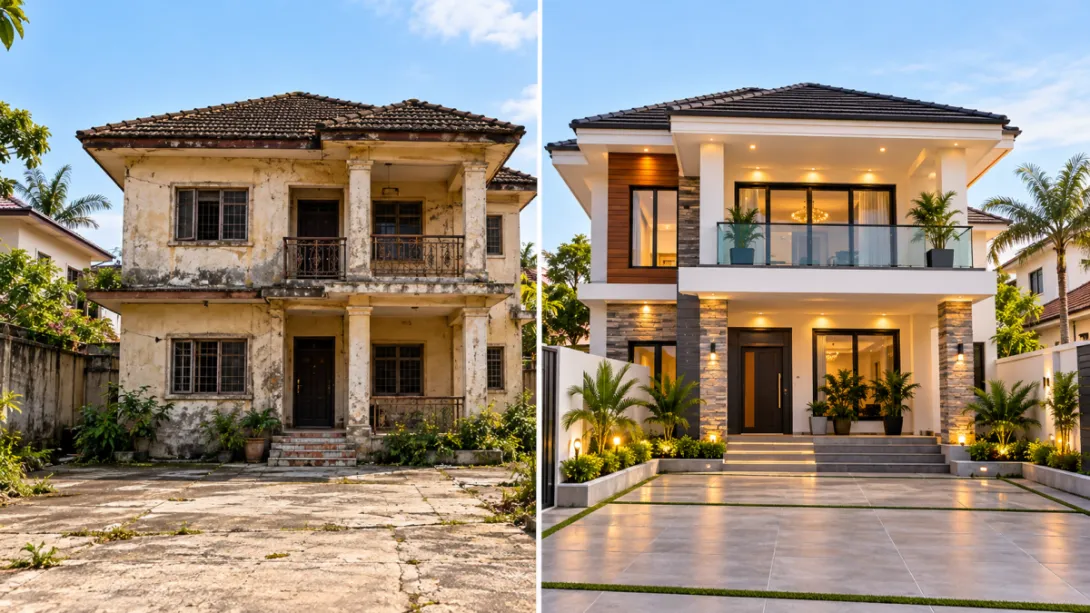
Your House Is Good, So Why Is Nobody Buying It?
You have a house in a decent location. The neighbourhood is established, the property has a reasonable amount of space, and the building has served its purpose for years.
Yet, when you put it up for sale, something unexpected happens.
People enquire, but few arrange inspections. Some inspect the property and never return. Others complain about the design, the finishing or the amount they would need to spend on renovations.
Then you notice something frustrating: a newer house in the same neighbourhood appears to attract more attention, even though your property may have a larger plot or more generous rooms.
What is happening?
Your house may be good, but the market may no longer find its current design, condition or price attractive.
This is a challenge many homeowners and property investors face when selling older houses in Lagos and other parts of Nigeria.
Buyers are not necessarily looking for the oldest or newest property. They are looking for a property that meets their needs, fits their budget and makes financial sense.
The good news is that an old house does not automatically need to be demolished or completely rebuilt before it can sell.
Sometimes, the solution is a better price. Sometimes, it is targeted renovation. In other cases, it involves identifying the right buyer and presenting the property differently.
If you are struggling to sell an old house, here are practical steps you can take to make it more attractive to today's buyers.
1. Understand Why Buyers May Be Rejecting the Property
Before spending money on renovation, find out why the house is not selling.
It is easy to assume that buyers are simply unwilling to pay the asking price. But the problem could be more complicated.
Perhaps the kitchen looks outdated. Maybe the bathrooms need attention. The house might have poor natural lighting, an awkward layout or visible signs of deterioration.
Alternatively, the property may be in good condition but priced above comparable houses in the neighbourhood.
These are different problems, and each requires a different solution.
Start by reviewing feedback from prospective buyers and property inspections. Ask your agent what objections buyers raise most frequently. Compare your property with similar houses currently available in the area.
Pay attention to repeated complaints.
If several buyers independently mention the same problem, take it seriously.
Do not start renovating until you understand what is preventing the sale.
2. Recognise That Today's Buyers May Want a Different House Design
One reason older houses can be difficult to sell is that housing preferences change.
A house built 20 or 30 years ago may have been designed around the preferences of buyers at that time.
Today, some buyers may prefer more open living spaces, larger windows, contemporary kitchens, modern bathrooms, better storage and more functional room arrangements.
Consider a traditional house with a small, enclosed kitchen, dark living room, dated ceiling design and old-fashioned bathroom fittings.
The structure may still be sound, but the presentation may make the property feel less appealing than a newer alternative.
Does that mean the house must be completely redesigned?
Not necessarily.
Start by identifying which features make the property feel dated and determine whether they can be improved economically.
You might discover that replacing worn-out fittings, improving lighting, repainting walls and modernising the kitchen can make a meaningful difference.
However, avoid assuming that every buyer wants an open-plan layout or luxury finishing. The appropriate design depends on the location, property type, target buyer and prevailing market preferences.
The goal is not to make every old house look the same. It is to make the house suitable for the buyer most likely to purchase it.
3. Improve the Exterior Before Spending Heavily on the Interior
First impressions matter when selling property.
Before a buyer enters the building, they have already formed an initial impression from the exterior.
A faded façade, damaged gate, overgrown garden, peeling paint or neglected driveway can make a property appear poorly maintained.
Even if the interior is spacious and structurally sound, the exterior may discourage prospective buyers from looking further.
Fortunately, some exterior improvements are relatively straightforward.
Consider:
- Repainting faded exterior walls.
- Repairing damaged sections of the perimeter fence.
- Cleaning the driveway and entrance.
- Trimming overgrown plants.
- Improving outdoor lighting.
- Repairing a gate that does not close properly.
- Removing rubbish and unnecessary items from the compound.
- Cleaning windows and other visible surfaces.
These improvements can help the house look better maintained and create a more welcoming entrance.
However, do not spend excessively on decorative landscaping or elaborate gates if comparable buyers in the area are unlikely to pay more for them.
Improve the first impression without allowing cosmetic work to consume your expected profit.
4. Modernise the Kitchen and Bathrooms Strategically
The kitchen and bathrooms can influence how buyers perceive an older house.
A kitchen with damaged cabinets, worn countertops, outdated fittings and poor lighting may make the entire property feel old.
Likewise, stained tiles, leaking taps, damaged sanitary fittings and poor ventilation can create doubts about the property's maintenance.
But replacing everything is not always necessary.
Depending on the condition, you could:
- Repair or replace damaged cabinet doors.
- Replace worn-out handles and taps.
- Improve lighting.
- Repair leaking plumbing.
- Repaint suitable surfaces.
- Replace broken or badly stained tiles.
- Upgrade damaged sanitary fittings.
- Improve ventilation and cleanliness.
- Replace a deteriorated countertop where justified.
The key is to distinguish between improvements that genuinely matter and expensive upgrades that offer little additional appeal.
For example, installing imported kitchen fittings may not make financial sense if the expected buyer is looking for a reasonably priced family home.
Similarly, a luxury bathroom renovation may be unnecessary when basic repairs and contemporary, durable fittings would achieve the desired result.
Before renovating, compare the property's likely selling price after improvements with the total cost of carrying out the work.
You are preparing the property for sale, not necessarily building your dream home.
5. Make the House Feel Brighter, Cleaner and More Spacious
An older house can sometimes feel smaller or darker than it actually is.
Heavy curtains, overcrowded rooms, poor lighting and unnecessary furniture can make spaces appear less functional.
You may not need structural alterations to improve the situation.
Start with simple measures:
- Remove unnecessary furniture and clutter.
- Clean windows to improve natural light.
- Replace broken light fittings.
- Use appropriate neutral paint colours where repainting is necessary.
- Repair damaged doors and handles.
- Keep rooms clean and well ventilated.
- Arrange furniture to show how each space can be used.
- Remove personal items that distract buyers from the property itself.
If the house is occupied, you do not necessarily need to empty it completely. The objective is to help buyers see the space, understand its potential and imagine how they could use it.
If the property is vacant, avoid leaving it looking neglected. Basic cleaning, maintenance and suitable presentation can make inspections more inviting.
For properties being marketed online, good photographs are essential. Poor lighting, untidy rooms and badly framed pictures can make a property appear less attractive than it is.
6. Address Structural and Maintenance Problems
There is an important difference between an old house that looks dated and an old house that has serious defects.
A property may need repainting and new fittings. Another may have roof leaks, faulty wiring, plumbing problems, dampness, drainage issues or structural deterioration.
These problems should not be treated as cosmetic issues.
Before putting substantial money into renovation, arrange an appropriate inspection by qualified professionals.
Depending on the findings, you may need to address:
- Roof leaks and damaged roofing materials.
- Faulty electrical installations.
- Leaking or damaged plumbing.
- Persistent dampness and water penetration.
- Poor drainage.
- Damaged floors.
- Cracked walls that require professional assessment.
- Defective doors and windows.
- Other safety or structural concerns.
Do not simply paint over damp patches or conceal defects to make the house look attractive during inspections.
Such an approach can create problems later and undermine buyer confidence.
If significant defects exist, obtain estimates for the necessary repairs. Then decide whether to carry out the work before selling, adjust the asking price or market the property transparently to a buyer willing to renovate.
A clean appearance attracts attention, but a realistic assessment of the property's condition helps buyers make informed decisions.
7. Price the Property According to the Current Market
Sometimes, the biggest obstacle to selling an old house is not its condition. It is the asking price.
A seller may calculate the price based on what the house cost to build years ago, how much money has been spent maintaining it or what the owner hopes to receive.
But buyers assess the property against alternatives available today.
They may compare your old house with a recently built property, another house requiring less renovation or a plot of land on which they could build to their preferred design.
This means that even a well-maintained older property can struggle to sell if the asking price does not reflect its condition and competitive position.
Before deciding on a price, consider:
- Recent sales of comparable properties, where reliable information is available.
- Asking prices for similar properties in the neighbourhood.
- The property's age and condition.
- Land size and usable floor area.
- Accessibility and surrounding infrastructure.
- Documentation and title status.
- Likely renovation costs.
- Demand for the property's type and price range.
Remember that an advertised price is not necessarily the final price at which a property sells.
Where possible, obtain a realistic market assessment from a qualified property professional.
A property priced according to the market is better positioned to attract serious enquiries than one priced according to the seller's expectations alone.
8. Understand Who Is Most Likely to Buy the Property
Not every old house should be marketed to the same category of buyer.
This is particularly important when selling properties in established parts of Lagos, where the age of the building, size of the land and development potential can influence buyer interest.
Your potential buyers might include:
Families seeking a home: They may value the location, number of bedrooms, compound space, security and proximity to schools, workplaces and other amenities.
Investors seeking rental income: They may focus on rental demand, achievable rent, repair costs, ongoing maintenance and the likely return on their investment.
Developers: They may be more interested in the plot size, location, access, planning considerations and redevelopment potential than in the existing building.
Buyers seeking renovation opportunities: They may be willing to purchase an older property at a price that leaves room for renovation and personalisation.
Each category evaluates value differently.
For example, a developer might see an old bungalow on a substantial plot as an opportunity to construct a different type of property, subject to planning and other applicable requirements.
A family, on the other hand, might prefer to renovate the existing building and move in.
The way you market the property should reflect its most realistic audience.
If redevelopment potential is a major selling point, provide accurate information about the land and documentation. Do not promise that a buyer can construct a particular building without verifying the relevant planning requirements.
The right buyer may not be looking for the house you currently have. They may be looking for what the property can reasonably become.
9. Consider Whether Renovation or Selling As-Is Makes More Sense
Before renovating an old house, compare the financial implications of selling it in its current condition with the cost and likely benefits of improving it.
Consider this illustrative example.
Suppose an older property could reasonably sell for ₦100 million in its current condition.
You estimate that spending ₦12 million on targeted improvements could make it more attractive. After reviewing comparable properties, you believe the renovated property might sell for ₦118 million.
The figures would look like this:
| Item | Amount |
|---|---|
| Estimated sale price before renovation | ₦100 million |
| Estimated renovation cost | ₦12 million |
| Potential sale price after renovation | ₦118 million |
| Potential increase in sale price | ₦18 million |
| Difference after renovation cost | ₦6 million |
The ₦6 million difference is not automatically your profit. You would still need to account for additional transaction expenses, holding costs, selling expenses and applicable taxes.
You would also need to consider whether the estimated sale price is realistic and whether the renovation could uncover unexpected problems.
Now imagine that the same improvements would only increase the likely sale price from ₦100 million to ₦108 million.
In that case, spending ₦12 million may not be financially justified.
You might be better off carrying out essential repairs, improving the presentation and selling at a competitive price.
This is why property owners should evaluate renovations as an investment decision rather than assume that every improvement will produce a corresponding increase in resale value.
10. Make the Property Easy to Inspect and Buy
Even an attractive, reasonably priced property can take longer to sell if the transaction process is difficult.
Buyers may become discouraged when inspections are repeatedly postponed, important questions go unanswered or documentation cannot be produced when requested.
To improve the selling process:
- Keep the property reasonably clean and accessible.
- Arrange inspection times that work for serious buyers.
- Prepare available title and ownership documents.
- Provide accurate information about the property's size, condition and features.
- Disclose known material defects appropriately.
- Be clear about the asking price and the terms of the sale.
- Respond promptly to enquiries.
- Work with a competent property professional who understands the target market.
Buyers need to assess not only the building but also the transaction itself.
Uncertainty about ownership, documentation or the sale process can discourage otherwise interested purchasers.
Where documentation requires clarification or correction, seek appropriate legal advice before proceeding.
Making a property easier to inspect, assess and purchase can remove avoidable obstacles to a sale.
11. Improve the Marketing, Not Just the House
Some properties struggle to sell because they are poorly presented to the market.
An online listing may contain dark photographs, incomplete information, vague descriptions or no clear explanation of the property's strongest features.
A buyer who cannot understand the property's value from the listing may simply move on to another option.
Your marketing should explain what makes the property worth considering.
Include accurate information about:
- Location and accessibility.
- Land size and building layout.
- Number of bedrooms and bathrooms.
- Parking and compound space.
- Existing amenities.
- Condition and recent improvements.
- Available ownership documentation.
- Potential uses, where supported by the property's characteristics and applicable regulations.
- Asking price and relevant sale terms.
Use clear, well-lit photographs that show the exterior, interior and important features.
If the property has a large plot, good road access or a particularly useful layout, highlight these strengths.
If it requires renovation, avoid misleading buyers by presenting it as newly renovated. Instead, explain its existing condition and the opportunities it may offer.
Where the property is suitable for different types of buyers, your marketing can reflect those possibilities without exaggerating its potential.
12. Don't Renovate Just Because the House Is Old
Age alone does not determine whether a property needs renovation.
Some older houses are well maintained, structurally sound and situated in desirable locations. Others require significant repairs despite being relatively recent.
Before making improvements, distinguish between three categories.
Essential repairs: Work required to address defects, safety concerns, deterioration or significant maintenance problems.
Marketability improvements: Changes that improve presentation, functionality and buyer appeal, such as repainting, replacing damaged fittings or improving lighting.
Optional upgrades: Expensive additions that may be attractive but are not necessary to make the property competitive.
Prioritise essential repairs and evaluate marketability improvements against their likely benefits.
Optional upgrades should be considered only when there is a sound reason to believe they will appeal to the target buyer and justify their cost.
For example, installing a swimming pool or expensive smart-home system may not make sense for a modest family house in a neighbourhood where buyers prioritise affordability, security and accessibility.
In another market segment, those features might matter more.
The point is not to avoid spending money. It is to spend money where it has a reasonable chance of improving the property's market position.
How Can You Sell an Old House Faster?
If your property has been on the market for months, use this practical checklist before making your next move.
Step 1: Review the price. Compare your asking price with similar properties and consider the house's actual condition.
Step 2: Identify the main objections. Ask agents and prospective buyers what is discouraging them.
Step 3: Inspect the building. Determine whether there are structural, electrical, plumbing, roofing or drainage issues.
Step 4: Prioritise improvements. Focus on repairs and upgrades that are relevant to your likely buyer.
Step 5: Identify your target market. Decide whether the property is best suited to an owner-occupier, investor, renovator or developer.
Step 6: Improve the presentation. Clean the property, declutter the rooms and take clear, professional photographs.
Step 7: Prepare the documentation. Ensure available ownership documents are organised and any title concerns are addressed appropriately.
Step 8: Market the property strategically. Highlight its genuine strengths and reach buyers who are likely to value them.
Step 9: Evaluate feedback. If serious buyers continue to raise the same concerns, reconsider your price, presentation or renovation strategy.
No approach can guarantee an immediate sale. However, these steps can help you address common obstacles and position the property more competitively.
Final Thoughts: An Old House Can Still Find the Right Buyer
A house does not become worthless simply because its design is outdated.
It may have a strong location, a generous plot, useful space, a sound structure or potential for improvement. But those advantages need to be presented in a way that makes sense to today's buyers.
Sometimes, a few carefully chosen improvements can make a difference.
Sometimes, a more realistic asking price is the answer.
In other cases, the best strategy is to market the property to someone who values its land, location or redevelopment potential rather than its existing design.
The important thing is to understand what the market wants before committing more money to the property.
Don't spend blindly trying to make an old house look new. Understand why it isn't selling, identify the right buyer and make the changes that matter.
That is how you approach the sale strategically.
Need Help Selling or Finding the Right Property?
At LandMall, we understand that property decisions involve more than the building itself. Location, accessibility, documentation, condition, pricing and market demand all matter.
Whether you are selling an older house, searching for a property to renovate or exploring real estate investment opportunities, a clear understanding of the market can help you make better-informed decisions.
Before you renovate, understand the opportunity. Before you sell, understand your buyer.
Find your opportunity. Make informed decisions. Build your property future with LandMall.
Ready to Sell Your Property?
An old house doesn't have to remain on the market for months. The right pricing, strategic improvements and effective marketing can make a difference.
At LandMall, we help property owners position their properties for the market, connect with potential buyers and explore the best way forward.
Don't just list your property. Make it marketable.
Sell smarter. Sell with LandMall