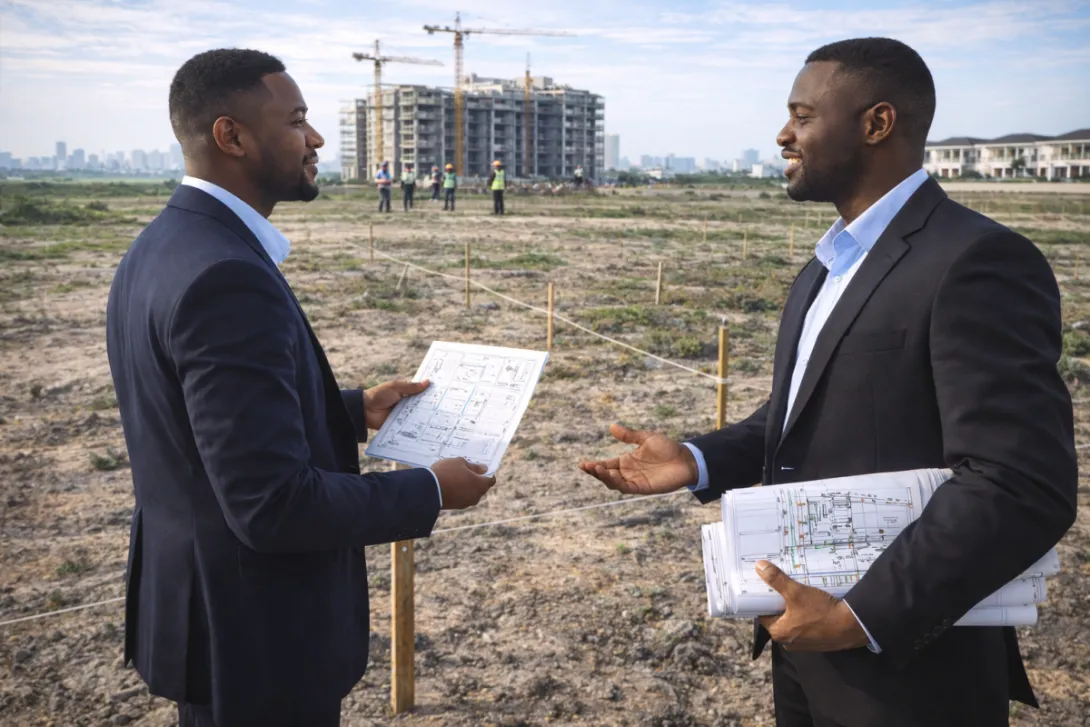
Real estate joint ventures in Nigeria have become one of the fastest ways landowners, developers, and investors build wealth without one party carrying all the burden. When structured properly, a JV can turn idle land into cash flow, finished units, or a major payout. When structured badly, it can trap your land in disputes, stalled projects, and endless excuses.
This guide explains how real estate JV works in Nigeria, the common profit sharing models, the key documents you must verify, and the red flags to watch before you sign anything.
What is a real estate joint venture
A real estate joint venture is a partnership where two or more parties combine resources to develop a property project and share the returns.
The most common JV in Nigeria is simple:
The landowner contributes land
The developer contributes capital, construction, approvals, and execution
Both parties share the completed units or sales proceeds based on an agreed ratio
In other cases, an investor may fund part of the project, or a technical partner may manage construction while a developer raises money.
Why JV is popular in Nigeria
A JV solves two problems at once.
Landowners have valuable land but may not have development capital
Developers have expertise but need clean land and strong titles to build on
A JV allows both sides to profit while spreading risk and responsibility.
Common real estate JV structures in Nigeria
1. Built units sharing model
This is the classic land for units approach.
The developer builds a defined number of units and shares them with the landowner based on the agreed split. Each party can sell or keep their units.
Best for landowners who want long term wealth and rental income.
2. Profit sharing model
Here, all units are sold and both parties share the net profit after agreed costs.
Best for landowners who want cash out rather than finished units.
3. Hybrid model
The landowner receives some finished units plus a share of sales proceeds.
Best for landowners who want both cash and a long term asset.
4. Debt plus equity JV
A third party provides financing and earns a fixed return or profit participation, while landowner and developer still share equity.
Best for large projects where capital requirement is high.
Profit sharing in Nigeria JV deals
Profit sharing is not one size fits all. It depends on location, title strength, zoning, market demand, development cost, and who carries what risk.
Common JV splits you will hear include:
60 40
50 50
70 30
But the split should be driven by real inputs, not vibes.
A clean titled land in a premium area with strong market demand gives the landowner stronger negotiation power. A land with title issues, access problems, or planning restrictions weakens negotiation power.
The most important question in any JV
Before discussing ratios, ask this:
How will we define costs, and how will we calculate profit
Many JV disputes happen because profit was not clearly defined, costs were not controlled, and reporting was not transparent.
A strong JV agreement must define:
What counts as project cost
Who approves expenses and variations
How sales proceeds are collected
How profit is calculated
When distributions are paid
How disputes are resolved
Documents you must verify before a JV
If you are a landowner, do not hand over possession without verification. If you are a developer, do not bring capital without verification.
These are non negotiable.
Land title documents
Survey plan and charting where applicable
Family or community consent history where applicable
Proof of ownership and chain of title
Building approvals process plan and feasibility
Encumbrance checks and third party interests
Company registration and authority of signatories where parties are corporate
If any document is unclear, pause. JV is not charity. It is a high value partnership.
Key clauses a proper JV agreement should contain
A good JV agreement in Nigeria should cover:
Parties, roles, and contributions
Project scope, timeline, and milestones
Development approvals responsibilities
Profit split or unit allocation structure
Cost definition and budget approval process
Banking and sales collection framework
Reporting obligations and audit rights
Default clauses and remedies
Exit options and buy out clauses
Dispute resolution, arbitration, and court jurisdiction
Termination events and what happens to the land if the project fails
This is where many people get it wrong. They sign short letters, vague MOUs, or handshake agreements. That is how disputes start.
What to watch out for in JV deals
Here are the common red flags in Nigerian real estate JV:
Developer pushes for possession without documentation
No clear budget and cost approval process
No sales control framework or transparent collection account
No defined timeline with consequences for delay
Promises of unrealistic returns or completion time
Developer refuses independent legal review
Landowner is asked to sign power of attorney too early
No dispute resolution pathway
If any of these appear, slow down and restructure the deal.
How to make your JV deal stronger
If you want a JV that works, insist on structure:
Do a feasibility and valuation first
Agree on unit mix, target market, and pricing plan
Define budgets and expense approvals
Use escrow or controlled project accounts
Use milestones for releases and handovers
Use independent legal drafting and review
Document everything
A JV is only profitable when it is enforceable, bankable, and transparent.
LandMall CTA
If you are a landowner looking to partner with developers, or a developer sourcing verified JV land opportunities, LandMall can support you with deal sourcing, project structuring guidance, and transaction support.
We help you assess the land, verify documentation, understand market feasibility, and move with clarity.
Let us help you structure the right JV deal today.
www.landmall.ng