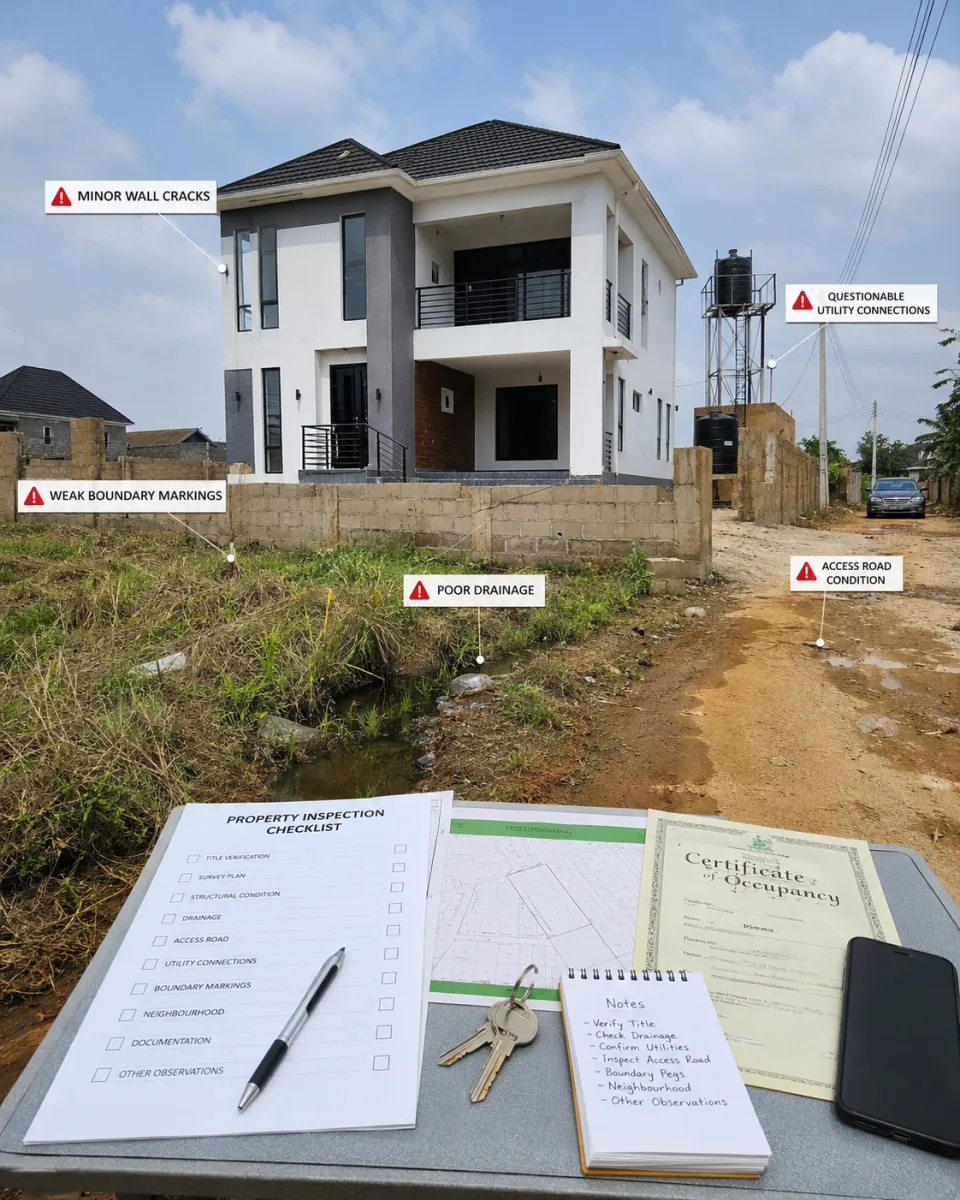
Many buyers assume that once they have visited a property and walked around the site, they have done enough inspection. In reality, some of the biggest mistakes in buying property in Nigeria happen because people notice the visible features but miss the warning signs that affect ownership, safety, cost, and long term value. That is why understanding what buyers often miss during property inspection is such an important part of real estate due diligence in Nigeria. Official Nigerian inspection practice standards are built around checking major systems and components, which shows that a proper inspection is meant to go far beyond surface appearance.
A property can look attractive on inspection day and still have serious issues. Title may be weak, the survey may not match the land, maintenance problems may be hidden, or the building may sit in a location with planning or acquisition risk. In Lagos, official land administration systems exist precisely because buyers need more than visual confidence. The Lagos eGIS portal provides public access to land records and property related search functions, reinforcing the fact that a physical visit alone is not enough.
1. Buyers Often Focus on Finishing and Ignore Legal Status
One of the most common property inspection red flags is that buyers get distracted by paint, tiles, ceilings, and fittings while ignoring the legal position of the property. A fine building or attractive plot does not automatically mean the transaction is safe. In Nigeria, title, ownership history, and registry verification are essential parts of inspection and due diligence.
That is why what to look out for before buying property should always include more than the physical structure. If the title is defective or the seller lacks authority, the appearance of the property will not protect the buyer. This is one of the major reasons many professionals treat legal verification as part of inspection, not something separate to think about later.
2. They Do Not Check Whether the Survey Matches the Land
Another issue buyers miss is the connection between the survey plan and the actual land on ground. A property may be shown physically, but the survey details may not match the exact parcel being sold. Cross checking the survey against the location, boundaries, and coordinates is a standard due diligence step recommended in Nigerian property guidance.
This is one of the most practical answers to what to check during property inspection. If the survey does not align with the actual land, the buyer may be looking at the wrong plot, a reduced portion, an encroached parcel, or a site with future boundary problems.
3. They Miss Hidden Structural or Building Defects
Many buyers notice cosmetic issues but fail to pay attention to defects that affect safety or long term repair cost. Home Inspectors Nigeria’s standards of practice emphasize inspection of a home’s major systems and components, not just visible design features.
In practical terms, hidden issues during property inspection may include leaks, weak drainage, poor ventilation, faulty electrical fittings, water pressure problems, cracks, roof issues, and poor workmanship that only becomes obvious later. Nigerian legal and technical commentary on latent defects also highlights that some flaws are not immediately obvious at the time of sale, which is why a serious inspection should be more methodical than casual.
4. They Ignore the Surrounding Environment
A buyer may inspect only the unit or plot and ignore the wider environment. That is a mistake. Good property inspection tips for buyers should include checking the road access, drainage around the property, neighboring developments, flooding risk, noise level, and general suitability of the area.
This matters because a property may be structurally decent but still become stressful to own or occupy if the surrounding environment is poorly planned, flood prone, difficult to access, or under development pressure that creates future risk. In Lagos, building control guidance is aimed at helping owners and developers better understand planning and compliance obligations, which shows how important location context is.
5. They Forget to Confirm Ownership and Seller Authority
One of the biggest errors in safe property purchase in Nigeria is assuming the person showing the property has the right to sell it. During inspection, buyers often focus on the site itself and forget to ask whether the seller is the true owner, a lawful representative, a company with proper authority, or someone making claims they cannot support.
This is especially important for family land, company owned property, and properties with a long chain of transfers. A smart inspection process should always be tied to ownership verification, not just physical viewing.
6. They Do Not Investigate Encumbrances or Competing Claims
Another thing buyers often miss during property inspection is the risk of encumbrances, disputes, mortgages, pending litigation, or competing claims. Legal due diligence commentary on Nigerian property transactions consistently warns that buyers should check for these issues before purchase.
This is important because a property can look peaceful on ground and still carry legal complications that are not visible during a normal inspection visit. A proper property inspection checklist in Nigeria should therefore include background checks, registry searches, and investigation into the transaction history, not just physical observation.
7. They Overlook Government Acquisition or Planning Risk
Some buyers inspect the property physically and assume that if the land is open and people are building nearby, it must be safe. That is not always true. One of the most dangerous things people miss is whether the land is under government acquisition, affected by planning restrictions, or in a development area with compliance issues.
This is one reason official search platforms and building control guidance matter. Visual inspection cannot tell you everything about legal status. For buyers in Lagos especially, what to check during property inspection should include land record search and planning related verification where necessary.
8. They Fail to Inspect Utilities and Everyday Functionality
Buyers also make the mistake of checking only the broad look of a property without testing the everyday things that affect comfort and cost. Water pressure, drainage flow, sockets, switches, ventilation, natural lighting, waste handling, shared areas, and access systems can all affect the real experience of the property. Nigerian guidance on home inspections and building defects shows that everyday functionality is a major part of proper inspection.
This is where what buyers often miss during property inspection becomes practical. A property may seem fine for ten minutes, but daily use may reveal recurring stress if utilities and systems were never properly checked.
9. They Rush the Process Because the Deal Looks Attractive
A lot of inspection mistakes happen because buyers are under pressure. The property seems affordable, the seller appears persuasive, or the location is popular, so they move too quickly. Several Nigerian due diligence guides warn that rushing is exactly how buyers miss important facts.
Good real estate due diligence in Nigeria takes time. It involves layered checks, document review, physical inspection, and professional input where needed. A rushed inspection is one of the fastest ways to miss red flags.
A Practical Inspection Mindset for Buyers
A smart buyer should treat inspection as both a physical and legal exercise. Walk through the property carefully. Ask questions. Compare what you see with the documents. Verify the survey. Check official records. Confirm the seller’s authority. Look for hidden defects and environmental risks. That is the real meaning of a better property inspection checklist in Nigeria.
Final Thoughts
If you want to avoid regret, learn what buyers often miss during property inspection before you commit money. The biggest risks are not always the ones that show up in photos or on first inspection. Hidden defects, weak title, poor survey alignment, seller authority issues, acquisition risk, and environmental problems can all turn a promising deal into a costly mistake.
The safest approach is simple. Inspect with your eyes, but verify with records, documents, and proper due diligence. That is how to make a smarter safe property purchase in Nigeria.
Before you pay for any land or property, make sure you are not missing the things that truly matter.
LandMall helps buyers and investors access better property opportunities and supports clients with practical guidance across the property process.
Call or WhatsApp +234 901 900 1191 or +234 808 668 2070 to get started.