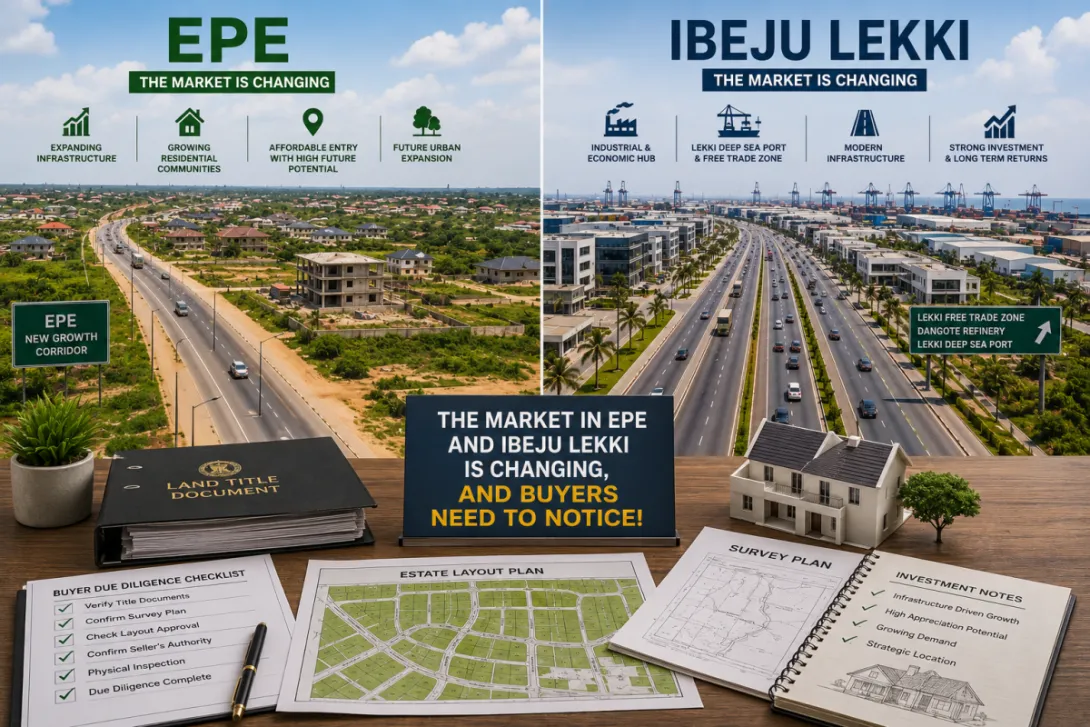
For years, Epe and Ibeju Lekki were discussed mostly as future growth corridors. People talked about cheap land, long term appreciation, and buying early before prices moved. That conversation is still relevant, but it is no longer enough.
The market in Epe and Ibeju Lekki is changing, and buyers need to notice because these locations are no longer being shaped only by speculation. They are increasingly being shaped by real infrastructure, industrial activity, tighter planning scrutiny, stronger buyer awareness, and changing investor expectations.
That means the old way of thinking about these corridors is becoming less useful. Today, smart buyers need to ask different questions. Not just where can I buy land cheaply, but what kind of market is actually emerging here, what risks are becoming more visible, and what type of opportunity now makes the most sense.
The market is becoming more infrastructure driven
One of the clearest reasons the market is changing is infrastructure. Ibeju Lekki is no longer just a name buyers mention because of future hope. It is increasingly tied to visible economic anchors such as the Lekki Deep Sea Port, the Dangote Refinery area, the Lekki Free Trade Zone, and the wider corridor expansion around industrial and logistics activity.
Epe is also changing because it is becoming more closely linked to the broader Lekki Epe growth direction. As urban development pressure moves outward and the corridor continues to attract attention, Epe is being pulled into a stronger long term development conversation.
This matters because real estate markets become stronger when location stories move from promise to visible direction. Buyers in both Epe and Ibeju Lekki now have to think more seriously about which parts of these corridors are truly benefiting from infrastructure and which are simply being marketed aggressively.
Buyers are becoming more selective
Another major change is buyer behavior. The market is no longer only attracting people who want to buy and wait blindly. More buyers are asking about title, layout approval, proximity to actual development, likely resale demand, and the difference between hype and usable investment logic.
This is a healthy change. In earlier years, many people entered these corridors with a very simple idea: buy anything in Epe or Ibeju Lekki and wait. That approach is now weaker because the market is becoming more layered.
Some parts of these locations are becoming more valuable because of actual growth drivers. Other parts may still take much longer to mature. Some land may be in stronger positions for residential demand. Other land may be better suited to long term holding. Some deals may look attractive on price but carry serious documentation or compliance risk.
That means buyers can no longer treat the entire corridor as one uniform opportunity.
Compliance and verification now matter more than ever
One of the biggest signs that the market is changing is the stronger visibility of planning and documentation risk. Lagos State’s recent publication of 176 illegal estates, many in Epe and Ibeju Lekki, is a major reminder that land demand and development pressure do not remove the need for proper approvals and verification.
This changes the market in a serious way. Buyers now need to understand that location growth does not automatically protect them from bad documentation, weak title, or approval problems. In fact, popular growth corridors often attract more risky transactions because speed and hype can outrun due diligence.
So the changing market in Epe and Ibeju Lekki is not only about more opportunity. It is also about more responsibility. Smart buyers now have to pay closer attention to title quality, seller authority, survey checks, layout approval, and whether an estate or development is properly positioned legally.
Ibeju Lekki is moving closer to an economic use story
Ibeju Lekki is changing because it is becoming harder to talk about it only as raw land speculation. The market is being shaped more visibly by industrial and logistics relevance.
That makes the location more interesting, but it also changes the type of investor that may benefit most. Buyers looking for exposure to industrial corridor growth, earlier commercial relevance, and stronger medium term demand may increasingly see Ibeju Lekki as a more active long term play rather than a distant bet.
This is important because it means some parts of Ibeju Lekki may now move differently from simple land banking logic. The market is slowly becoming tied to use, movement, and economic activity, not just future expectation.
Epe is moving from quiet outskirt to expansion market
Epe is also changing, but in a different way. It is still attractive for long term investors, especially those who want earlier entry points and broader room for future appreciation. But the market is becoming more serious because it is being pulled into the wider development energy of the Lekki Epe axis.
This means Epe is becoming less of a remote wait forever story and more of a future expansion market. For some buyers, that is a very attractive shift. It means the market may offer stronger long term upside if they position in the right areas with proper verification and patience.
At the same time, the change also means buyers need to be more careful. As interest grows, so does the risk of poor documentation, overhyped marketing, and land sold on stories rather than real due diligence.
The smarter question is no longer just where to buy
Because the market is changing, buyers need to move beyond the old question of where can I buy cheapest. The smarter question now is what type of investment am I trying to make.
If the goal is corridor exposure with stronger ties to infrastructure and industrial growth, some buyers may lean toward Ibeju Lekki.
If the goal is earlier entry into a location tied to longer term residential and urban expansion, some buyers may lean toward Epe.
If the goal is purely land banking, that strategy still exists, but it now requires more care than before. Buyers need to be more aware of timing, title, approvals, and future usability.
What buyers need to notice now
The biggest thing buyers need to notice is this: Epe and Ibeju Lekki are no longer simple one story markets.
These corridors are changing in ways that make them more interesting, but also more demanding. Opportunity is still there, but it now rewards buyers who think more carefully.
That means buyers should notice:
Infrastructure is becoming more real
Economic activity is shaping value more clearly
Compliance risk is more visible
Title and approval checks matter more
Not every plot carries the same investment logic
The best deals are not always the cheapest ones
These are the differences that now separate smart positioning from careless buying.
Final Thoughts
The market in Epe and Ibeju Lekki is changing, and buyers need to notice because the old conversation is no longer enough. This is no longer only about buying cheap land and hoping for appreciation. It is about understanding corridor growth, infrastructure relevance, compliance risk, land quality, and what kind of future demand may actually emerge.
For smart buyers, that is good news. It means there is still room for opportunity. But it also means success now depends more on clarity, patience, and proper verification than ever before.
Looking to buy in Epe or Ibeju Lekki with stronger market understanding and better due diligence?
LandMall helps buyers and investors access better property opportunities and supports clients with practical guidance across verification, planning, development, and project execution.
Call or WhatsApp +234 901 900 1191 or +234 808 668 2070 to get started.