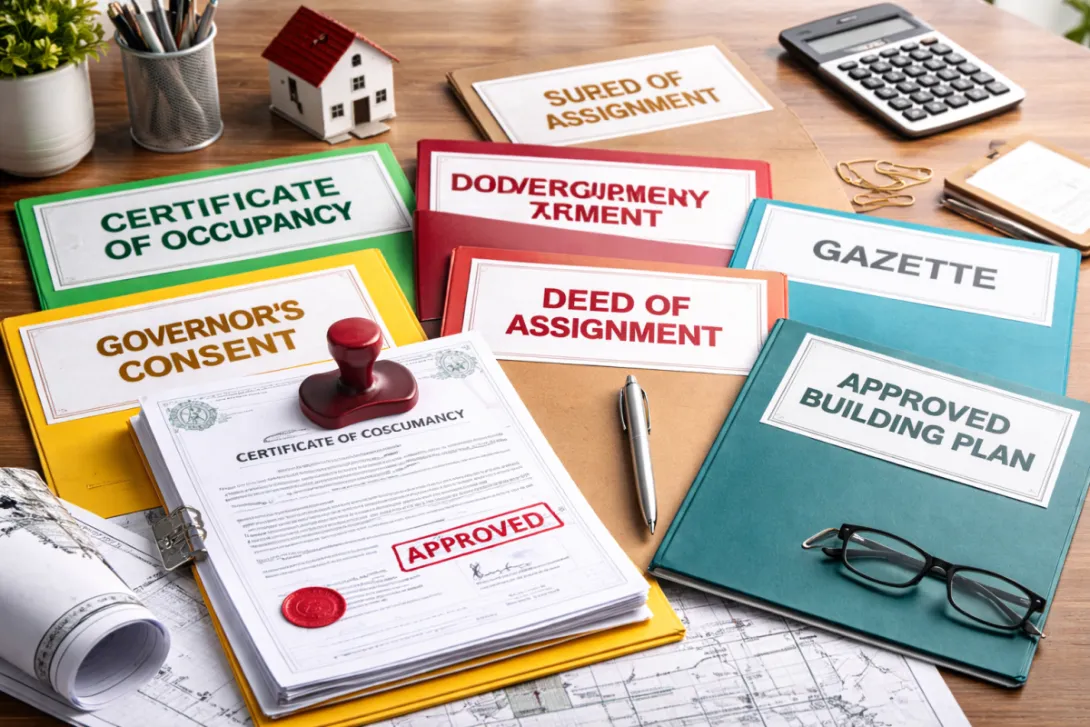
Buying land can look simple from the outside, but one of the biggest mistakes buyers make is focusing only on price and location while ignoring title. In reality, land titles in Nigeria are one of the most important parts of any property transaction because they help you understand the legal status of the land, the chain of ownership, and the risks you may be stepping into. Under the Land Use Act, land in each state is vested in the Governor to be held in trust and administered for the use and common benefit of Nigerians, which is why title and state based approval processes matter so much in property transactions.
If you understand the major types of land titles in Nigeria, know how to carry out land title verification in Nigeria, and know what warning signs to look for before purchase, you are far less likely to lose money or buy into avoidable disputes. This guide breaks the subject down in simple terms.
Why Land Titles Matter
A land title is not just a piece of paper. It is part of the legal and administrative record that helps show the nature of the right being claimed over the land. Good title documentation can make it easier to register interests, trace ownership, process later transfers, and carry out proper due diligence. Poor or incomplete documentation, on the other hand, can create problems for resale, financing, development approvals, and even possession.
That is why buying land in Nigeria should never be based on verbal assurances alone. Before payment, buyers should examine both the documents and the land itself. A title may sound impressive, but the real question is whether it is genuine, traceable, and suitable for the exact property being sold.
Common Land Titles in Nigeria and What They Mean
1. Certificate of Occupancy
The Certificate of Occupancy in Nigeria is one of the most well known land documents. Under the Land Use Act, the Governor has power to grant a statutory right of occupancy over land in urban areas, and the certificate is commonly used as formal evidence of that grant or recognition of that right.
In practical terms, a C of O is often treated as a strong title document, but buyers should not assume that seeing a C of O ends the inquiry. You still need to confirm that the certificate actually relates to the land being sold, that the seller has authority, and that there are no conflicting claims, encumbrances, or defects in the chain of transfer.
2. Governor’s Consent
Governor’s Consent in Nigeria usually comes up when an existing holder of a statutory right of occupancy wants to transfer that interest by assignment, mortgage, sublease, transfer of possession, or similar dealing. Section 22 of the Land Use Act restricts those transactions without the Governor’s consent.
This means Governor’s Consent is often associated with a later transfer of land or property, not necessarily the original grant. It is important because it supports legal regularization of the transaction and helps strengthen the documentation trail. Still, it should not be treated as proof that every other issue is clean. Due diligence remains essential.
3. Gazette and Excision
When people talk about Gazette and Excision in Nigeria, they are usually referring to land that was formerly under government acquisition but has had a portion released back to indigenous owners or communities by the government, and that release is reflected in an official gazette. In practice, buyers often hear that land is “under excision” or “gazetted.” Because these claims are highly specific to the location and government records, buyers should insist on verification rather than relying on marketing language. In Lagos, official land administration tools exist for certified true copy search and application tracking, which shows how important record based verification is.
A gazette can be significant, but it does not mean every plot in an area is automatically safe. You must verify whether the exact parcel being sold falls within the released area and whether the seller’s interest is properly connected to that release.
4. Deed of Assignment
A Deed of Assignment in Nigeria is the document typically used to record the transfer of an assignor’s interest in land to an assignee. In practical property transactions, it is one of the key instruments used to show how ownership moved from one party to another. Where Governor’s Consent is required, consent may be endorsed on the instrument evidencing the assignment, mortgage, or sublease under the Land Use Act.
For a buyer, the deed matters because it helps establish the transaction history. But a deed is only as useful as the title behind it and the authority of the person signing it. That is why property due diligence in Nigeria should always review the deed together with survey records, registry checks, and the seller’s ownership trail.
5. Survey Plan
A survey plan is not the same as a title, but it is one of the most important land documents in practice because it helps identify the land, its dimensions, and its location. It can also be used during verification to check whether the land falls within committed acquisition, road alignment, or other restricted areas depending on the state records available. In Lagos, the state’s land administration portals support official search and tracking functions that reinforce the value of record based verification.
A buyer should never accept a survey plan blindly. The question is not just whether a survey exists, but whether it matches the land on ground and whether it raises red flags when checked through proper channels.
How to Verify Land Title in Nigeria
1. Check the Seller’s Root of Title
The first step in how to verify land title in Nigeria is to ask a simple question: how did the seller become entitled to the land? Was it through a C of O, a deed, inheritance, family ownership, excision, allocation, or another route? A title document must be examined as part of a chain, not in isolation. The Land Use Act itself recognizes that land may continue to be subject to mortgages, legal or equitable encumbrances, or other interests valid in law, which is why the deeper history matters.
2. Search the Relevant Land Registry or Official Portal
A serious buyer should conduct a registry or official record search where possible. In Lagos, the Lagos State Land Administration Portal provides Online Property Search, Certified True Copy Transaction, and Track Your Application functions. The Lagos State government services page also points users to certified true copy search and related land administration services.
This matters because land title verification in Nigeria should be based on traceable records, not just photocopies handed to you by a seller or agent. An official search can help confirm whether a file exists, whether the document trail is consistent, and whether a transaction is being represented accurately.
3. Verify the Survey and Exact Location
A title can appear neat on paper and still relate to the wrong parcel of land. That is why you should compare the documents with the actual land on ground. A licensed surveyor and legal adviser can help verify whether the coordinates, dimensions, and physical boundaries line up with the documents being presented. This is one of the smartest parts of property due diligence in Nigeria.
4. Check for Encumbrances, Disputes, and Government Issues
Even where there is title documentation, buyers should still investigate whether the land is subject to disputes, family claims, mortgages, acquisition issues, planning restrictions, or illegal development concerns. Lagos State has publicly announced enforcement against illegal estates and developments, which is a reminder that development risk is not theoretical.
5. Confirm the Seller’s Identity and Authority
A good title means little if the person selling to you has no authority to transfer it. You need to confirm whether the seller is the actual owner, a duly authorized representative, a family head with proper consent where family land is involved, or a company acting through the right corporate authority. This point is partly legal judgment and partly factual investigation, but it is central to safe buying land in Nigeria.
What to Look Out for Before Buying Land With Title
One of the biggest mistakes buyers make is assuming that once land has a title, everything is settled. That is not true. A document can be genuine and still leave room for major problems if it does not match the land, if the transaction history is defective, or if there are encumbrances and disputes around the property.
Here are some key things to watch closely:
Mismatch between documents and physical land
The names, size, survey details, and boundaries should make sense when compared with the land being shown.
Claims that cannot be verified
Statements like “it has excision” or “consent is in process” should be backed by records, not promises. Lagos provides official search and tracking tools precisely because verification matters.
Government acquisition or planning risk
A parcel may be in a problematic corridor, an area under restriction, or part of an illegal development pattern.
Breaks in the ownership chain
If the seller cannot show how the land moved from the prior owner to the current one, that is a red flag.
Pressure to pay before due diligence
That is often where avoidable mistakes begin. Title verification should happen before payment, not after.
Common Misunderstandings About Land Titles
A common misunderstanding is that one good sounding document solves everything. It does not. A C of O, Governor’s Consent, deed, gazette claim, or survey plan each plays a role, but smart due diligence looks at how they fit together.
Another misunderstanding is that official title means there can be no encumbrance or dispute. The Land Use Act itself contemplates that land can remain subject to mortgages and other valid interests, so buyers still need broader checks.
Final Thoughts
Understanding land titles in Nigeria is one of the smartest things any buyer, investor, or developer can do before committing money. The goal is not just to collect documents. The goal is to understand what those documents mean, how they connect to the land, and whether they actually support a safe purchase.
The safest approach is simple. Learn the major types of land titles in Nigeria, carry out proper land title verification in Nigeria, inspect the land physically, confirm the seller’s authority, and treat every claim as something to be checked, not merely accepted. That is how to reduce risk and make better property decisions.
Need help reviewing land documents in Nigeria, verifying title, or making safer property decisions before you buy?
LandMall helps buyers and investors connect with more reliable property opportunities and supports clients with practical guidance across the real estate process.
Call or WhatsApp +234 901 900 1191 to get started.