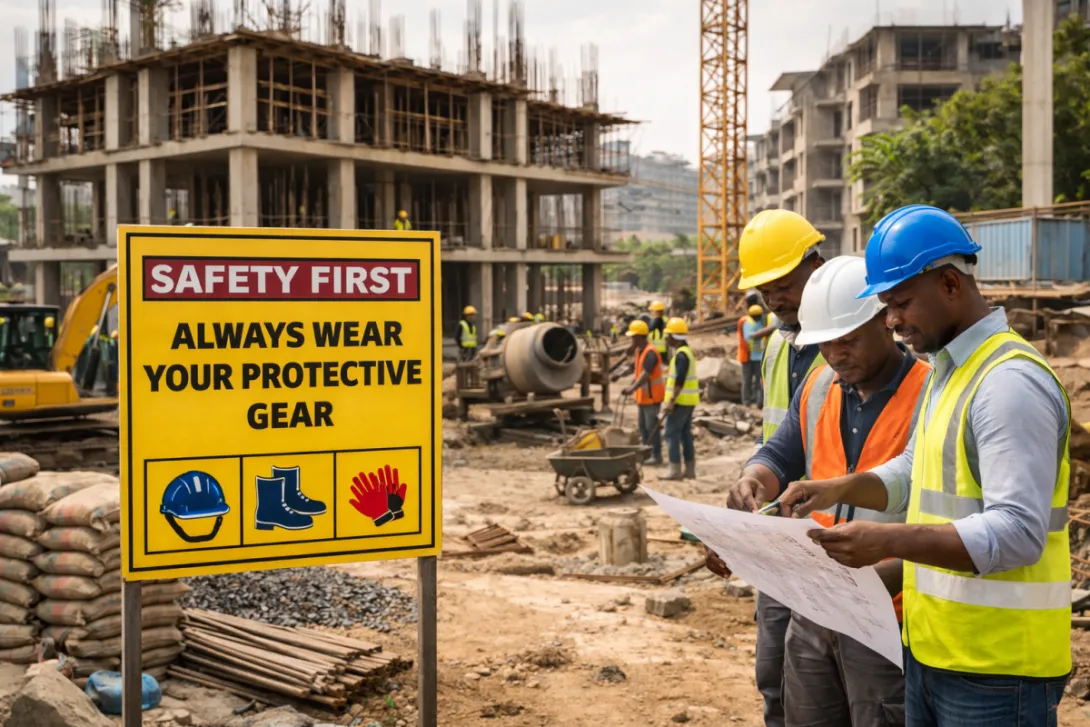
Construction is one of the most important parts of property development, but it also comes with serious risks if safety is ignored.That is why understanding the important safety tips on every construction site is necessary for workers, builders, contractors, supervisors, and property owners alike. Good construction site safety protects lives, reduces accidents, improves project efficiency, and helps ensure that work is completed without avoidable disruption.
Many incidents on building projects happen because basic precautions are overlooked. A worker may slip on a wet surface. A visitor may walk into a restricted area. A machine may be used without proper inspection. Materials may be stacked carelessly. In many cases, these accidents can be prevented through better awareness, stronger supervision, and proper site safety rules.
In this guide, we will explore the most essential construction safety tips, the common hazards on building sites, and the practical steps that can improve building site safety from start to finish.
Why Construction Site Safety Matters
Every active construction site has potential risks. There may be excavation work, electrical connections, heavy lifting, scaffolding, moving equipment, exposed materials, and unfinished structures. Without proper controls, these conditions can quickly become dangerous.
Strong construction site safety helps to:
Protect workers from injury
Reduce project delays caused by accidents
Prevent damage to materials and equipment
Improve productivity and accountability
Protect property owners, site visitors, and supervisors
Support smoother project execution
When safety is taken seriously, the site becomes more organized, more efficient, and more professional.
1. Always Use the Right Safety Equipment
One of the most basic but important safety tips on construction sites is the use of proper personal protective equipment. Workers should not be allowed on site without the required safety gear for their role and environment.
Common safety equipment on construction sites includes:
Safety helmets
Reflective jackets
Safety boots
Hand gloves
Protective goggles
Dust masks
Ear protection where necessary
This is a key part of construction workers safety because even one missing item can expose a worker to serious harm.
2. Control Access to the Construction Site
A construction site should not be treated like an open public area. Unauthorized access increases the chances of accidents, confusion, and interference with work. Visitors, clients, suppliers, and passersby should not move around freely on site without proper guidance.
To improve construction site safety, every site should have:
A fenced or clearly marked boundary
Controlled entry points
Warning signs
Restricted zones
Visitor supervision
This is especially important on projects in busy urban areas where public movement is harder to manage.
3. Keep the Site Clean and Organized
Good housekeeping is one of the most overlooked construction safety tips, yet it plays a major role in accident prevention. A site filled with scattered tools, broken blocks, exposed nails, loose cables, and waste materials creates unnecessary risk.
To improve building site safety, site teams should ensure that:
Walkways remain clear
Waste is removed regularly
Tools are stored properly
Materials are arranged safely
Spills are cleaned immediately
Sharp objects are not left exposed
A cleaner site is easier to manage and much safer for everyone working there.
4. Use Skilled Workers and Proper Supervision
Many construction hazards arise because unqualified people are handling tasks they do not fully understand. Structural work, electrical installations, heavy equipment operation, and scaffolding all require skill, experience, and supervision.
A good construction site management process should ensure that:
Workers know their responsibilities
Artisans are qualified for their tasks
Supervisors monitor work properly
Unsafe behavior is corrected immediately
Safety instructions are clearly communicated
Proper supervision is one of the foundations of safe construction practices.
5. Inspect Tools and Equipment Before Use
Faulty equipment can quickly turn into a serious danger on site. Machines, ladders, wheelbarrows, power tools, cables, and scaffolding should all be checked regularly before use.
Important inspection points include:
Damaged tools
Loose machine parts
Weak scaffolding
Exposed wires
Faulty electrical connections
Worn out safety gear
Routine checks are one of the most practical important safety tips on every construction site because they help detect problems before they cause harm.
6. Be Careful With Work at Height
Working at height is one of the most dangerous aspects of construction. Falls from roofs, upper floors, ladders, or scaffolding can cause severe injury or even death.
To strengthen safety on construction sites, ensure that:
Scaffolding is stable and properly installed
Ladders are positioned correctly
Open edges are protected
Workers handling height related tasks are properly equipped
Materials are not left carelessly on raised platforms
No site should rush work at height without proper safety measures in place.
7. Handle Electrical Installations Safely
Temporary site power, exposed wires, wet ground, and active tools make electrical safety a major concern on building projects. Poor handling of electrical work is one of the most common construction hazards on site.
Safe electrical practices include:
Allowing only trained personnel to handle installations
Keeping wires insulated and organized
Avoiding exposed live connections
Keeping electrical areas dry
Switching off equipment when not in use
Inspecting tools before operation
Electrical safety is a critical part of good property construction safety.
8. Store Materials Properly
How materials are stored affects both safety and quality. Cement bags, rods, timber, tiles, pipes, chemicals, and blocks should be arranged in a secure and orderly manner.
Safe material storage should involve:
Keeping heavy materials stable
Avoiding unsafe stacking heights
Storing sharp objects away from walkways
Protecting cement from moisture
Separating hazardous materials where necessary
Keeping flammable materials under control
Unsafe storage can lead to collapses, injuries, and material damage.
9. Use Visible Warning Signs
Warning signs help workers and visitors identify danger areas quickly. They are a simple but valuable part of site safety rules and should be placed where they can easily be seen.
Examples include:
Danger, work in progress
No unauthorized entry
Hard hat area
Electrical hazard
Deep excavation
Wet floor
Use safety boots
Signs should be clear, visible, and appropriate for the specific risks on the site.
10. Hold Regular Safety Briefings
Safety should not only be discussed after an accident. One of the best construction safety tips is to hold regular safety briefings so workers stay aware of the day’s tasks, hazards, and precautions.
A site safety briefing may cover:
The work planned for the day
Hazards to watch out for
Use of protective equipment
Emergency procedures
Restricted areas
Equipment handling reminders
These short daily talks can help build a stronger culture of construction workers safety.
11. Prepare for Emergencies
Even with strong precautions, construction sites must still prepare for emergencies. This means having the right response plan in place if something goes wrong.
Basic emergency readiness should include:
A first aid box
Access to emergency contacts
Fire extinguishers where needed
A responsible person for emergency response
Clear access routes for help
Awareness of the nearest medical support
Emergency planning is a necessary part of construction site safety and should never be ignored.
12. Protect Visitors and Property Owners
Many people assume that safety rules only apply to workers, but visitors, consultants, developers, and property owners are also at risk when they visit an active site. Anyone entering the site should follow the same basic safety requirements.
Visitors should:
Wear protective gear
Be guided by site personnel
Avoid restricted zones
Stay away from active machinery
Follow all instructions on site
This is an important part of overall property construction safety.
13. Avoid Rushing the Work
Pressure to meet deadlines often leads to poor decisions. Workers may skip safety steps, use materials carelessly, ignore warning signs, or operate without enough supervision. These shortcuts increase risk.
One of the most effective safe construction practices is to prioritize discipline over panic. A project that moves carefully and correctly is better than one that moves fast and becomes unsafe.
14. Make Safety Everyone’s Responsibility
Safety works best when everyone on site sees it as part of their job. It should not be left to one person alone. Workers, supervisors, contractors, and property owners all have a role to play.
A strong safety culture means:
Workers report hazards
Supervisors enforce standards
Contractors provide protective equipment
Developers support proper procedures
Visitors respect site rules
This shared responsibility helps improve construction site management and reduces accidents.
Common Construction Hazards to Watch Out For
To maintain good construction site safety, it is important to recognize the common risks on building projects. Some of the most frequent construction hazards include:
Falls from height
Slips and trips
Electrical shock
Falling objects
Unsafe scaffolding
Excavation collapse
Machinery accidents
Poor lifting methods
Fire outbreaks
Lack of protective equipment
The earlier these risks are identified, the easier they are to manage.
Final Thoughts
The important safety tips on every construction site are not just formal rules. They are practical measures that protect lives, improve site efficiency, and help keep projects on track. Good construction site safety starts with awareness but must be supported by action, supervision, discipline, and proper planning.
Whether you are handling a small residential build or a larger development, safety should be part of every stage of the construction process. From protective gear and equipment inspection to material storage and emergency planning, the goal is simple: create a site where work can progress safely and confidently.
A safe construction site is not only better for workers. It is better for the project, the client, and the long term value of the investment.
Planning a building project and looking for a team that understands property construction from start to finish?
Brick Fort, as LandMall’s trusted construction partner, helps clients handle construction professionally from planning and coordination to execution and finishing. For a more structured, safer, and better managed building process, reach out today.
Call or WhatsApp: +234 901 900 1191 or +234 808 668 2070
For land, property opportunities, and expert real estate support, connect with LandMall today.