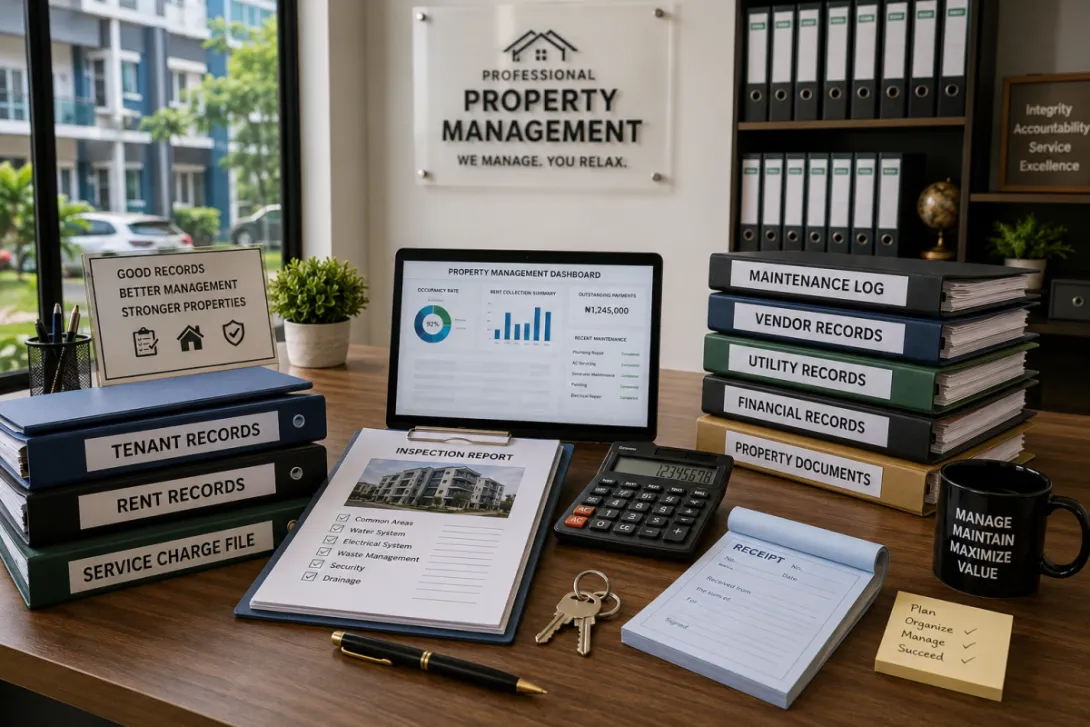
Good property management is not only about collecting rent, responding to complaints, or supervising repairs. It is also about keeping the right records. Without proper documentation, even a well managed property can become difficult to control. Payments may be disputed, maintenance history may be unclear, tenant issues may be harder to resolve, and important details may get lost over time.
That is why understanding the important records every property manager should keep is essential for smoother operations, better accountability, and stronger decision making. Whether you manage one building or multiple units, good property management records help you stay organized and protect both the property owner and the people using the property.
Why Record Keeping Matters in Property Management
Strong documentation makes property management in Nigeria more professional and more efficient. It helps property managers track what is happening in the building, respond to issues faster, and avoid confusion when questions come up.
Good record keeping helps you:
Track rent and service charge payments
Monitor repairs and maintenance history
Keep tenant information organized
Document agreements and communication
Reduce disputes and misunderstandings
Support better long term property planning
In simple terms, proper property manager documentation helps the property run better.
1. Tenant Records
One of the most important tenant records for landlords and property managers is a proper tenant file. Every tenant should have a clear record that contains the basic details connected to their occupancy.
This may include:
Full name
Contact details
Unit or apartment number
Tenancy agreement
Move in date
Identification details
Emergency contact information
Any special notes relevant to management
Accurate tenant files make it easier to manage occupancy, communication, renewals, and any issues that arise during the tenancy.
2. Tenancy Agreement Records
A property manager should always keep signed copies of all tenancy agreements and related documents. This is one of the most important property management records because the tenancy agreement defines the rights, obligations, and expectations of both parties.
It helps clarify:
Rent amount
Payment schedule
Duration of tenancy
Rules of occupancy
Maintenance responsibilities
Notice requirements
Other terms agreed between the parties
Without this record, small disagreements can quickly become bigger problems.
3. Rent Collection Records
One of the most essential rental property records is a clear rent payment record. Every payment made by a tenant should be documented properly.
This should include:
Tenant name
Amount due
Amount paid
Payment date
Payment method
Outstanding balance if any
Receipt or payment confirmation
Good rent collection records help reduce disputes and make income tracking easier. They also support better financial planning for the property.
4. Service Charge Records
Where service charge applies, property managers should keep proper service charge records for each unit or occupant. This is especially important in estates, apartment buildings, and managed properties with shared services.
These records should show:
Service charge amount
Payment status
Date of payment
Arrears if any
Services covered
Any service charge adjustments
Clear service charge documentation helps improve transparency and reduces tension with residents or occupants.
5. Maintenance and Repair Records
Every property manager should keep a proper maintenance log. This is one of the most useful maintenance records for properties because it helps track what has gone wrong, what was fixed, when it was fixed, and how often issues keep repeating.
Maintenance records may include:
Date issue was reported
Nature of the problem
Unit or area affected
Contractor or technician assigned
Date repair was completed
Cost of repair
Follow up notes
This helps managers identify recurring problems and plan preventive maintenance more effectively.
6. Inspection Records
Inspection records are another major part of property manager documentation. Routine inspections help managers track the condition of the property and identify issues early.
Inspection records should cover:
Date of inspection
Areas inspected
Condition observed
Issues identified
Recommended action
Follow up status
These records are useful for both occupied units and common areas. They help show whether the property is being managed proactively or only reacting when problems worsen.
7. Complaint and Communication Records
Property managers should also keep records of major complaints, requests, and important communication with tenants, owners, contractors, and service providers.
This may include:
Complaint date
Nature of complaint
Person who raised it
Response given
Action taken
Resolution date
Keeping these records helps avoid confusion and provides useful background when similar issues come up later. It also improves accountability in property management in Nigeria.
8. Vendor and Contractor Records
Any property that uses cleaners, artisans, technicians, waste handlers, security providers, or maintenance contractors should have proper vendor records.
These should include:
Company or individual name
Contact details
Service provided
Work history
Payment history
Contract terms if any
Performance notes
Good vendor documentation helps with supervision and makes it easier to evaluate who is reliable and who is not.
9. Utility and Service Records
A property manager should keep records relating to utilities and service operations, especially in managed buildings and estates.
This may include:
Electricity usage or payment records
Water supply records
Diesel or fuel records where relevant
Waste disposal records
Generator servicing history
Equipment maintenance logs
These records support better monitoring and help explain service issues when they arise.
10. Financial Records
Beyond rent and service charges, a property manager should maintain clear financial records related to the property’s day to day operations.
This may include:
Income records
Expense records
Repair costs
Vendor payments
Outstanding balances
Budget summaries
Proper financial documentation makes reporting easier and supports better accountability to the property owner or management company.
11. Move In and Move Out Records
Move in and move out documentation is another important part of landlord record keeping. These records help track the condition of the unit before occupancy and after exit.
They may include:
Date of move in
Date of move out
Condition checklist
Keys collected or returned
Outstanding payments
Damage notes if any
These records are especially useful when there are disputes about damage, repair responsibility, or deposit related matters.
12. Property Compliance and Approval Records
Property managers should also keep important building related records such as approvals, permits, warranties, insurance documents, or service related certifications where applicable.
These are important because they support the long term administrative health of the property and help managers respond properly when official or operational questions come up.
Common Record Keeping Mistakes Property Managers Make
Some managers struggle with records because they:
Rely too much on memory
Keep incomplete files
Fail to update payment records on time
Do not document maintenance history
Ignore communication records
Mix up tenant files
Do not keep backup copies
These mistakes may look small at first, but they often create bigger management problems later.
Final Thoughts
Knowing the important records every property manager should keep is a major part of good property administration. Strong documentation supports better rent tracking, smoother maintenance, clearer communication, improved accountability, and more professional property management overall.
If you want a property to run efficiently, the records behind the scenes must be as strong as the operations in front of people. Good record keeping is not extra work. It is part of what makes property management truly effective.
Need help keeping your property better managed and more organized?
Landmall provides practical property management support that helps property owners maintain better structure, documentation, and day to day property operations.
Call or WhatsApp +234 901 900 1191 or +234 808 668 2070 to get started.