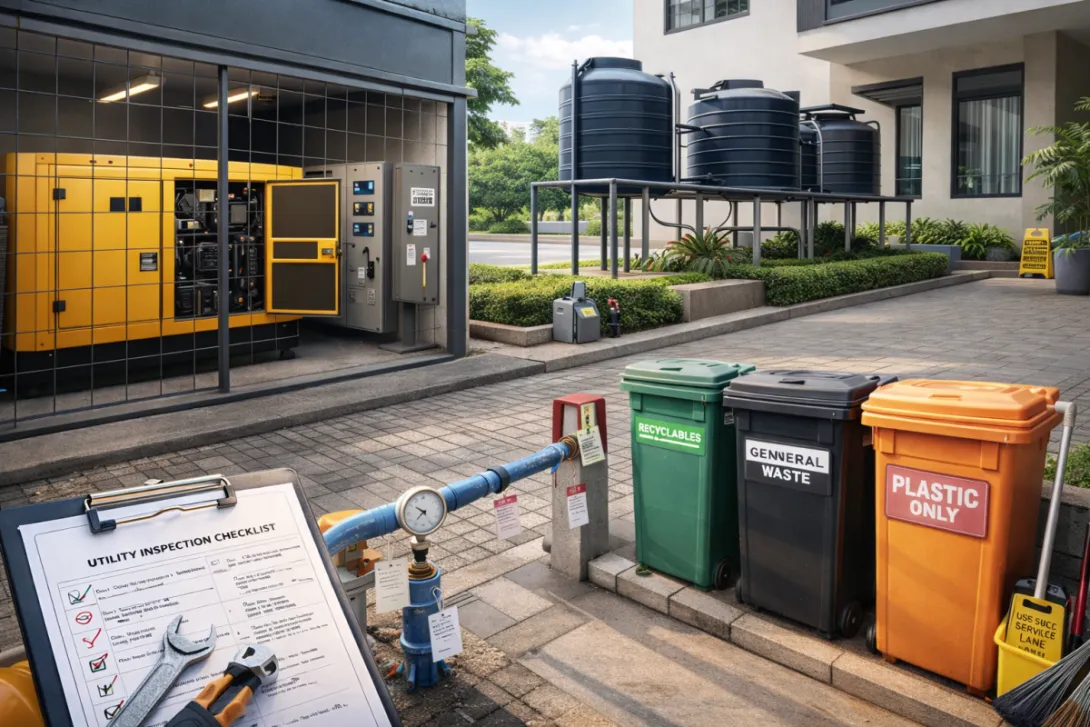
Efficient utility management is one of the most important parts of good facility management in Nigeria. Whether you manage a residential building, office complex, mixed use development, or commercial property, the way you handle power, water, and waste directly affects operating costs, occupant comfort, and long term property value.
Many buildings do not have major structural problems, but they still perform poorly because basic services are not managed well. Power is wasted, water systems leak or fail, and waste disposal becomes irregular or disorganized. Over time, these issues affect tenant satisfaction, increase running costs, and reduce the overall quality of the property.
That is why learning how to manage power, water, and waste more efficiently is essential for better property management in Nigeria and stronger building performance.
Why Efficient Utility Management Matters
In both residential and commercial properties, power, water, and waste are not minor issues. They are part of the daily experience of everyone who uses the building. When these services are poorly managed, the result is usually higher cost, more complaints, and avoidable maintenance problems.
Efficient utility management in residential properties and utility management in commercial properties helps to:
Reduce unnecessary operating expenses
Improve occupant comfort and satisfaction
Support better maintenance planning
Extend the life of building systems
Promote cleaner and safer environments
Protect long term property value
Good utility management is not only about saving money. It is also about making the property work better every day.
Managing Power More Efficiently
Power is often one of the highest running costs in many properties. Poor power management in buildings can lead to waste, equipment damage, frequent complaints, and rising maintenance expenses.
To manage power more efficiently:
1. Monitor Usage Regularly
You cannot manage what you do not track. Property managers should monitor electricity consumption patterns across the building and identify areas of waste.
2. Maintain Power Systems Properly
Generators, inverters, electrical panels, lighting systems, and wiring should be inspected and maintained regularly. Poor maintenance often increases fuel use and energy loss.
3. Use Energy Efficient Lighting
Switching to energy saving bulbs and efficient lighting systems can reduce electricity consumption significantly, especially in shared spaces.
4. Control Shared Area Consumption
Corridors, stairways, parking areas, security posts, and common facilities often consume more power than people realize. Smart scheduling and efficient fittings help reduce waste.
5. Educate Occupants
Occupants should understand how their daily habits affect energy use. Small actions like switching off unused lights and appliances can make a difference.
Good power management in buildings is a major part of reducing operating cost and improving efficient facility management.
Managing Water More Efficiently
Water problems in buildings are often ignored until they become expensive. Leaks, poor storage, wasteful usage, and weak maintenance can lead to higher bills, service disruption, and damage to property.
To improve water management in buildings:
1. Check for Leaks Frequently
Minor leaks in pipes, taps, tanks, and fittings can waste large amounts of water over time. Routine inspection helps catch problems early.
2. Maintain Water Storage and Distribution Systems
Water tanks, pumps, pipes, treatment systems, and plumbing lines should be inspected and serviced regularly to ensure reliable supply and clean water delivery.
3. Prevent Water Waste in Common Areas
Water used for cleaning, landscaping, and shared services should be monitored so that waste is reduced without affecting standards.
4. Respond Quickly to Plumbing Issues
Delayed repairs increase water loss and may also lead to damage in walls, ceilings, and finishes.
5. Encourage Responsible Use
Occupants should be encouraged to report leaks quickly and avoid careless water use.
Strong water management in buildings supports better hygiene, lower maintenance costs, and stronger overall building maintenance in Nigeria.
Managing Waste More Efficiently
Waste handling is one of the clearest signs of whether a property is well managed or neglected. Poor waste management in properties affects cleanliness, health, appearance, and occupant experience.
To improve waste management:
1. Create a Clear Waste Disposal System
Occupants and users should know where waste goes, how often it is collected, and the standard expected for disposal.
2. Keep Waste Collection Areas Organized
Waste holding points should be clean, accessible, and properly managed to avoid overflow, smell, and pest issues.
3. Ensure Timely Disposal
Irregular waste evacuation quickly creates problems. A consistent collection and disposal schedule is essential.
4. Work With Reliable Service Providers
Waste contractors or support vendors should be dependable, responsive, and properly supervised.
5. Promote Cleaner Occupant Habits
Even a good waste system can fail if users treat shared spaces carelessly. Communication and enforcement matter.
Effective waste management in properties improves the appearance of the building and supports healthier living and working conditions.
The Role of Planning and Supervision
One of the biggest mistakes in property management in Nigeria is waiting until there is a breakdown before acting. Efficient utility management works best when there is a system in place.
This should include:
Routine inspection schedules
Preventive maintenance plans
Usage monitoring
Clear reporting processes
Vendor supervision
Occupant communication
This kind of structure improves sustainable property management and helps reduce avoidable costs over time.
Common Mistakes That Increase Utility Problems
Many properties struggle with utilities because of poor management habits such as:
Ignoring small faults until they become major repairs
Poor monitoring of consumption
Weak supervision of service providers
Lack of maintenance planning
Unclear waste disposal systems
Slow response to complaints
No effort to control shared area utility use
These problems often seem small at first, but they gradually weaken the performance of the entire property.
Why This Matters for Property Owners and Managers
For owners, poor utility management reduces profitability and makes the property harder to maintain well. For managers, it increases complaints, emergencies, and operational stress. For occupants, it creates discomfort and frustration.
That is why how to manage power, water, and waste more efficiently is not just a technical issue. It is part of what makes a property functional, attractive, and sustainable.
Better utility management leads to:
Lower running costs
Better user satisfaction
Cleaner and safer spaces
Fewer avoidable repairs
Stronger long term asset value
Final Thoughts
Efficient handling of power, water, and waste is one of the clearest signs of quality facility management in Nigeria. A building may look impressive from the outside, but if utilities are poorly managed, the problems will show in daily operations.
The goal is not only to react when something goes wrong. The goal is to build a system that keeps services working better, costs more controlled, and the property more functional over time.
If you want stronger building performance, lower waste, and better occupant experience, then managing utilities properly should be a top priority.
Need help improving utility efficiency and overall property performance?
Landmall's partner Brick Fort supports property owners and developers with practical property and facility management solutions that help buildings stay functional, well maintained, and better managed over time.
Call or WhatsApp +234 901 900 1191 to get started.